


Palm Beach County, Florida Contractor License Bond Guide (2026)
If you plan to pull permits and work legally as a contractor in Palm Beach County, you need to understand one non-negotiable requirement: the contractor license surety bond. This guide breaks down everything you need to know about the $2,000 bond, from who needs it and what it costs to how you file it, renew it, and avoid costly compliance mistakes. Whether you are a first-time applicant or a seasoned contractor expanding into new municipalities, this is the most thorough resource you will find on Palm Beach County’s bonding rules.
Key Takeaways
Most locally licensed contractors in Palm Beach County must post a $2,000 contractor license surety bond with the Construction Industry Licensing Board (CILB) before they can pull permits or perform work.
This bond is a mandatory financial guarantee filed with the County-it is separate from state-level licensing through Florida’s Department of Business and Professional Regulation (DBPR), and it is not the same as a performance or payment bond on a specific project.
A contractor license bond is different from performance and payment bonds, which cover project-specific obligations rather than overall licensing compliance.
Typical annual premiums for a $2,000 Palm Beach County license bond run roughly $100–$200 for applicants with good credit; contractors with challenged credit may pay more.
The bond protects consumers and Palm Beach County from contractor non-compliance-it is not insurance for the contractor, and any claims paid by the surety must be reimbursed by the contractor.
Contractor Licensing Inc. can coordinate the entire bonding step as part of a complete contractor licensing and compliance package, saving you time and preventing filing errors.
How the Palm Beach County Contractor License Bond Works (Local Overview)
Palm Beach County-including West Palm Beach, Boca Raton, Jupiter, Delray Beach, and dozens of other cities-maintains its own contractor licensing system under Special Act 67-1876 and its amendments. Separate from anything the state requires, the County mandates a $2,000 surety bond for many contractor categories as a condition of obtaining and maintaining a local Certificate of Competency.
A surety bond is a three-party agreement. The contractor (called the “principal”) purchases the bond from a surety company, and the bond is filed with Palm Beach County (the “obligee”). If the contractor violates local codes, ordinances, or licensing rules and causes documented financial harm, affected parties can file a claim against the bond for up to the $2,000 penal amount. Surety bonds protect consumers from contractor non-compliance and give the County an enforcement tool backed by real dollars.
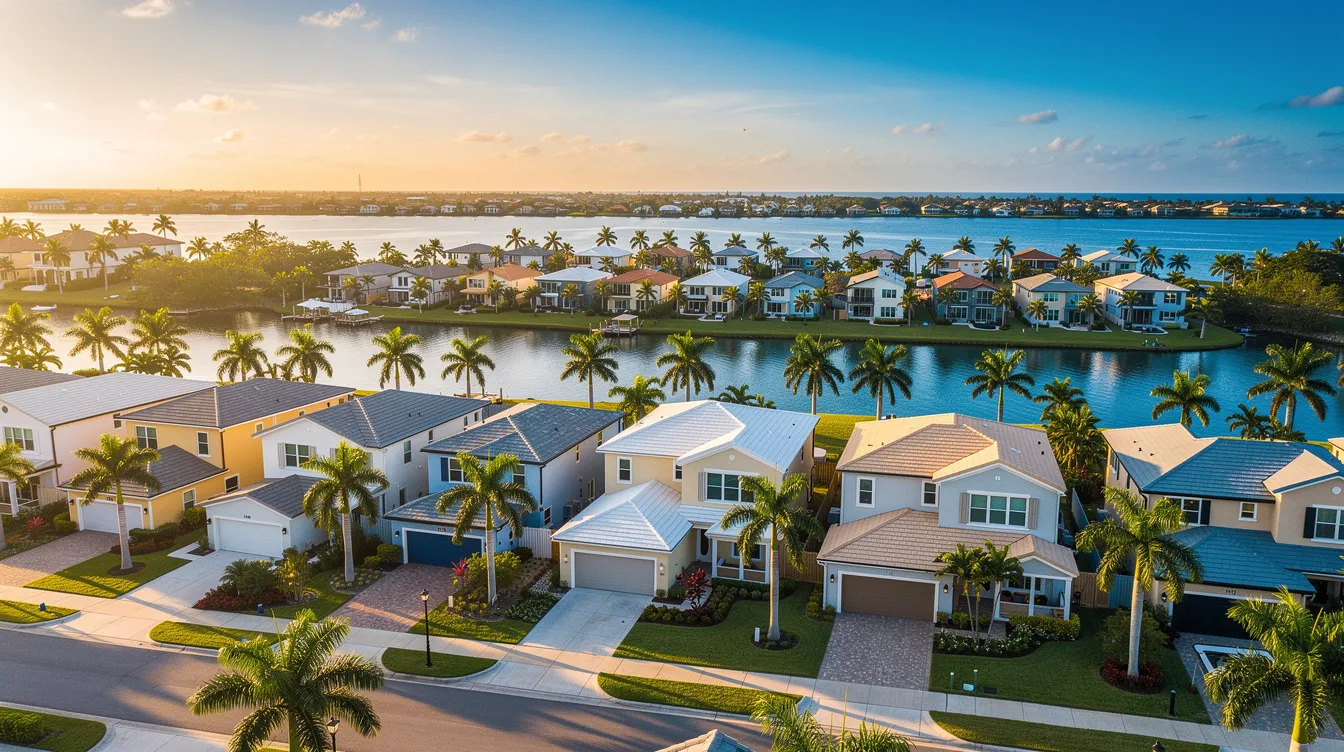
The bond is required before a locally licensed contractor can obtain permits for work under the Palm Beach County Planning, Zoning & Building Department. It is not optional, and it is not a formality-without it, your license application stalls and you cannot legally begin construction services in the County’s jurisdiction.
This requirement supports safe construction and long-term economic development across Palm Beach County and South Florida. By screening contractors financially and requiring them to guarantee compliance, the County creates a level playing field and gives homeowners a basic safety net.
Contractors must submit a surety bond with their application for a Certificate of Competency. Surety bonds in Florida are categorized into license, court, and contractor bonds, and the Palm Beach County license bond falls squarely in the “license bond” category-its purpose is to back your professional obligations, not to guarantee a specific project outcome.
Palm Beach County vs. State of Florida Contractor Licensing
One of the most common points of confusion for Florida contractors is the difference between state certification and local County licensing. Here is the short version:
State-certified license: Issued by the Florida Department of Business and Professional Regulation (DBPR) through the state Construction Industry Licensing Board. A state-certified license lets you work anywhere in Florida without taking additional local exams.
Palm Beach County local license: Issued by the Palm Beach County CILB. Requires passing a local trade exam (in most categories), posting the $2,000 bond, and meeting County-specific insurance and experience standards.
Florida law regulates contractors under separate state-level requirements that may involve different bond amounts, financial statement reviews, or continuing education obligations. The County’s $2,000 contractor license bond is a local license bond-it is filed with the Palm Beach County Construction Industry Licensing Board, not the state.
Practical example: A locally registered roofing contractor working primarily in West Palm Beach needs the $2,000 County bond, the County license, and separate state-level insurance requirements (including general liability insurance). A state-certified contractor who enrolls their DBPR license locally in Palm Beach County must also file the $2,000 bond and meet County insurance and workers’ compensation requirements as part of enrollment.
Contractor Licensing Inc. can help determine whether your business model calls for state certification, local registration, or both-and ensure the correct bonds are in place for each.
Who Requires the Contractor Bond in Palm Beach County?
The Palm Beach County Construction Industry Licensing Board (CILB) is the obligee that sets and enforces the $2,000 bond requirement for local licenses. The CILB oversees licensing, testing, discipline, and bond compliance for building, specialty, and trade contractors operating under local licenses in the County.
All municipalities within Palm Beach County are listed as obligees for the bond. The bond language specifically binds the contractor to “Palm Beach County, Florida and all municipalities therein.” Cities such as West Palm Beach, Lake Worth Beach, Riviera Beach, and Royal Palm Beach rely on this County-level licensing framework for contractor qualifications-meaning one County bond covers your licensing obligations across all of those cities.
Here is a quick breakdown of the three bond parties:
Party | Role |
|---|---|
Obligee | Palm Beach County and all municipalities therein |
Principal | The contractor applying for or holding the license |
Surety | The bonding company that issues and backs the bond |
The County can file a claim against the bond when a locally licensed contractor violates applicable codes or licensing rules and causes financial harm. Bond claims must be evaluated by assessing who the obligee under the bond is-in this case, it is the County and its municipalities.
Which Contractor Types in Palm Beach County Need the $2,000 License Bond?
The $2,000 bond applies broadly. Typical local license classifications that require the bond include:
General building contractors and general contractors
Residential contractors
Roofing contractors (Florida requires a Certified Roofing Contractor, or CCC, license for roofing work at the state level, and the County requires its own local license and bond for locally registered roofers)
Electrical contractors
Plumbing contractors
Mechanical and HVAC contractors
Specialty trade contractors (pool/swimming pool, fire sprinkler, etc.)
Journeyman and technician categories (depending on classification)
Requirements can vary slightly by classification. Palm Beach County periodically updates its contractor license ordinance and bond rules, and recent state legislation (HB 735 / HB 1383) has preempted certain trade scopes from local licensing as of July 1, 2024. However, the $2,000 bond remains in force for trades and licenses still under County purview.
Example: A roof replacement contractor working on architectural shingles in West Palm Beach must hold an active $2,000 bond on file with the County. Similarly, a small remodeling firm or a one-person specialty operation pulling permits in Lake Worth Beach needs the bond if they hold a County contractor license.
If you are unsure whether your specific trade classification still requires the County bond, verify directly with the Palm Beach County CILB or use Contractor Licensing Inc. to check for you. This is especially important given ongoing legislative changes.
Palm Beach County Contractor Bond Amount: Why $2,000?
The standard Palm Beach County contractor license bond amount is $2,000 per license. That number is set by County ordinance-not by the surety company and not by the contractor.
A bond’s penal amount represents the maximum limit up to which claims can be paid. If a contractor violates licensing rules and causes documented damage, the County or an affected party can make a claim, but the surety’s exposure is capped at $2,000 per bond. This is a relatively modest amount compared to the bonds required in many other contexts:
Bond Type | Required Amount |
|---|---|
Palm Beach County contractor license bond | $2,000 |
Florida contractor bonds (varies by type) | $5,000 to $20,000 |
Florida auto dealer surety bond | $25,000 |
Florida collection agency surety bond | $50,000 |
Public project performance bonds | Varies by contract value |
The $2,000 amount is not intended to cover all possible project losses. It is a regulatory guarantee-a financial incentive for contractors to follow the rules, and a limited source of recovery for the County or consumers when they do not.
The full $2,000 is the bond penalty (maximum claim exposure). The contractor pays only a small annual premium to the surety company, which is a fraction of the penal amount. The County can change bond amounts via ordinance, so contractors should confirm the current requirement before applying or renewing.
Cost of a $2,000 Palm Beach County Contractor License Bond
Contractors do not pay $2,000 up front. Instead, they pay an annual premium, which is a percentage of the $2,000 bond amount. Think of it like the premium on an insurance policy-you pay a fraction of the coverage limit, not the full amount.
Realistic premium ranges:
Applicant Profile | Estimated Annual Premium |
|---|---|
Strong credit (680+), clean record | $100–$150/year |
Average credit, no claims | $150–$200/year |
Weaker credit or prior claims | $200+ (varies by surety) |
Two-year term (some providers) | $160–$200 total |
Some surety bond providers offer two-year terms for around $160 with no credit check, while others quote annual premiums around $100 for low-risk applicants. The pricing depends on personal credit, business financials, claim history, and time in business.
Premiums may be discounted when multiple bonds, insurance policies, or multi-year terms are bundled together. Contractor Licensing Inc. can help compare bond quotes and integrate bond costs into broader license, insurance, and business planning for Palm Beach County contractors.
Eligibility: Credit, Background, and Financial Requirements
Surety underwriters will typically review the personal credit history of the owner or qualifier, public records, and sometimes business financials before issuing the $2,000 bond.
A minimum credit score of 660 is required for contractor licensing in Palm Beach County. Good credit (680+ FICO) usually results in quick approvals and the lower end of premium pricing. Contractors with scores between 580 and 659 face additional hurdles: they must complete a 14-hour financial responsibility course before the County will approve their license. Scores below 580 are generally insufficient for licensure.
Contractors may need to complete a financial responsibility course if their credit score is low-this is a County requirement, not a surety requirement, but a low credit score can also affect bond pricing and approval.
Applicants with prior bankruptcies, tax liens, or past bond claims can still often qualify for the bond, but should expect higher premiums or requests for additional documentation such as recent bank statements or business financials.
Contractors in Palm Beach County must provide proof of general liability insurance as part of their licensing package. The bond approval process is separate from County license approval-passing the surety’s underwriting does not mean the County has accepted your license application. The CILB separately evaluates experience, exam results, insurance, financial responsibility, and other eligibility factors.
Contractor Licensing Inc. can help applicants package credit explanations and financial documentation to improve bond approval odds and pricing.

Step-by-Step: How to Get Your Palm Beach County Contractor License Bond
Here is a clear sequence for obtaining your bond:
Confirm your license classification. Verify which trade category you are applying for and whether the $2,000 bond is required.
Get the exact bond form and wording. Download the prescribed bond form from Palm Beach County’s contractor forms page. The obligee name, bond amount, and language must match exactly.
Request a bond quote. Contact a surety or work with Contractor Licensing Inc. to get a premium quote based on your credit and business profile.
Complete the application. Provide your legal business name, qualifier details, FEIN, license classification, and any supporting financial documents.
Sign the indemnity agreement. This agreement means you personally guarantee reimbursement to the surety if a claim is paid.
Pay the premium. Once approved, pay the quoted premium to the surety.
File the original bond with the County. Submit the executed bond (and any required power-of-attorney page) to the Palm Beach County CILB.
Most $2,000 Palm Beach County bonds can be quoted same-day, often within minutes, especially for straightforward applications. Matching the obligee name, bond form, and effective dates exactly as specified by the CILB is critical-mismatched paperwork is one of the most common causes of delays.
Contractor Licensing Inc. can handle this as part of an integrated “license + bond + insurance” workflow for new or renewing contractors. Plan your bonding at the same time as your license application to avoid holding up permit issuance.
Application Details: Information You’ll Need for the Bond
Surety companies will typically ask for the following when you apply for a Palm Beach County contractor bond:
Legal business name and any DBAs
Federal Employer Identification Number (FEIN)
Owner or qualifier’s full legal name, Social Security Number, date of birth
Physical and mailing address (Palm Beach County or South Florida region)
License classification (general contractor license, roofing, electrical, etc.)
Description of business operations
Authorization for credit check (some low-amount bond providers waive this)
For certain risk profiles, sureties may also request recent bank statements or basic business financials, even on a $2,000 bond.
The bond must reflect the same contractor name and license qualifier name as on the Palm Beach County license records to be accepted. Double-check spelling, corporate suffixes (Inc., LLC), and addresses before submitting. A mismatch between your bond and your County records will cause rejection or delays.
Contractor Licensing Inc. routinely pre-fills bond applications using data from the contractor’s license file to reduce errors and processing time.
Filing Your Bond with Palm Beach County
Once the surety issues the bond-either a physical document with a raised seal or an electronically signed and sealed version-you must submit it to the Palm Beach County CILB or the appropriate County office. Filing typically happens before license issuance or renewal.
Key filing details:
Include any required power-of-attorney page from the surety company.
Some municipalities inside Palm Beach County (West Palm Beach, Boca Raton, Lake Worth Beach) may require proof of the County license and bond before allowing local registration or permit pulling.
Keep a copy of the executed bond and proof of filing with your compliance records and insurance documents. You may need to produce these during inspections, audits, or permit applications.
Contractor Licensing Inc. can coordinate direct mailing or electronic delivery of the bond to the County to streamline approval.
Bond Term, Effective Dates, and Synchronizing with License Renewal
Most Palm Beach County contractor license bonds are written on a one-year term, renewed annually to stay aligned with the County license period. The County license (Certificate of Competency) renews every two years, with renewal cards issued in July and a renewal deadline of September 30.
Aligning your bond effective and expiration dates with the County license cycle is essential. If your bond lapses even briefly, the County can declare your license inoperative and block permit issuance.
Planning tips:
Begin your bond renewal process at least 30–60 days before expiration, especially ahead of busy permit seasons in South Florida.
Some sureties offer multi-year bond options. A two-year term may save money and reduce administrative overhead, but limits your flexibility to switch providers or renegotiate pricing.
The surety can terminate the bond with 30 days’ notice via certified mail to the CILB. If that happens, you must secure a replacement bond immediately to avoid a gap.
Contractor Licensing Inc. can set reminders and coordinate renewals so you maintain continuous bonding and licensing in Palm Beach County without last-minute scrambles.
Renewing Your Palm Beach County Contractor License Bond
Annual bond renewal typically follows these steps:
Receive a renewal notice from your surety (usually 30–60 days before expiration).
Review the renewal premium. If your financial profile is unchanged, expect similar or slightly adjusted pricing.
Confirm no major changes to your business name, ownership, or license classification.
Pay the renewal premium.
Send the updated continuation certificate to Palm Beach County if the County requires it.
Improvements in your credit or business financials can lower renewal rates over time. Conversely, negative events-new liens, judgments, or bond claims-can push premiums higher.
If the bond expires or is canceled, Palm Beach County can suspend or revoke your local license or block permit issuance. This is not a theoretical risk; it happens every renewal cycle to contractors who overlook deadlines.
During renewal, update any changed business names, ownership structures, or addresses on both the bond and the County license. Contractor Licensing Inc. can coordinate bond renewal alongside Palm Beach County license renewal for a single, streamlined deadline.
What the $2,000 Palm Beach County Bond Does and Does Not Cover
What it covers:
Compliance with licensing laws, building codes, and Palm Beach County ordinances
Financial obligations to homeowners and the County arising from code violations or licensing rule breaches
The bond is used to repair damage done to government infrastructure or compensate for losses caused by contractor non-compliance
What it does not cover:
Workmanship warranties or guarantees of project quality
Payment of subcontractors or material suppliers (that is the role of a payment bond on specific projects)
Contractor’s own business losses (the $2,000 bond is a financial guarantee and not equivalent to general liability insurance)
Workers’ compensation claims
Project completion guarantees (that is a performance bond, which is a different instrument)
The bond is not insurance for the contractor. If the surety pays out a claim, the contractor must reimburse the surety for the full amount plus costs. It is a credit-backed guarantee, not a risk-transfer product like liability coverage.
Example: A local roofing contractor performing roof replacement with architectural shingles in West Palm Beach still needs general liability insurance to protect against third-party property damage and bodily injury. The bond simply backs licensing compliance-it does not cover a leak, a blown-off shingle, or a worker’s injury.
Claims Against Palm Beach County Contractor License Bonds
Claims against the bond typically begin with a complaint filed with the Palm Beach County CILB or the community services department handling contractor regulation. Here is how the process generally works:
Complaint filed by a homeowner, municipality, or the County itself.
Investigation by County staff or a code enforcement special magistrate.
Hearing before the CILB or special master, where evidence is reviewed.
Decision and, if the claim is valid, referral to the surety company.
Surety investigation and payment of the claim, up to the $2,000 penal sum.
The CILB also has authority to impose disciplinary penalties independent of the bond claim, including revocation, suspension, fines (up to $1,500 per violation in some cases), probation, or restitution.
Multiple claims over time can damage your reputation, raise future bond premiums, or make it difficult to get bonded at all. Contractors should resolve customer disputes early, document all work thoroughly, and follow Palm Beach County code and permitting rules strictly to avoid claims.
Contractor Licensing Inc. can help contractors understand complaint and discipline processes in Palm Beach County and how they interact with bond obligations.
Consequences of Not Maintaining the Required Bond in Palm Beach County
Failure to post or renew the $2,000 contractor license bond can result in:
License denial, suspension, or revocation by the Palm Beach County CILB
Fines and stop-work orders on active jobsites
Criminal penalties under Florida statutes for unlicensed contracting in serious cases
Civil liability that can void insurance coverage or invalidate contracts
Working without the required bond and license also exposes you to an outstanding code enforcement lien or other municipal enforcement actions.
Quick scenario: A contractor beginning roof replacement without a current bond and County license in Palm Beach County could be barred from passing inspections, closing out permits, and collecting final payment. The project stalls, the homeowner files a complaint, and the contractor faces discipline, fines, and potential legal documents from the County attorney.
Maintaining continuous bonding and licensing is less costly and less risky than dealing with enforcement actions and lost business opportunities.
Bonding for Different Project Types: Residential vs. Commercial Work
The $2,000 Palm Beach County contractor license bond is tied to the license, not to the size or type of a specific job. Whether you are doing residential remodels or commercial tenant buildouts, the same $2,000 bond covers your licensing compliance.
However, larger commercial or public works projects in Palm Beach County-such as the airport’s improvement projects at Palm Beach International Airport, municipal facilities development, or capital improvements division work-may require additional performance and payment bonds per contract. These bonds are separate instruments with different amounts, underwriting standards, and obligees.
Roofing Project Costs and Timelines in Palm Beach County
Since roofing is one of the most active contractor categories in the County, here is a snapshot of what projects look like locally:
Roofing Material | Estimated Cost (Palm Beach County) | Installation Time |
|---|---|---|
Architectural shingles | $12,000–$25,000 | 1–3 days |
Concrete and clay tile roofs | $18,000–$35,000 | 3–7 days |
Standing seam metal roofs | $20,000–$40,000 | Varies |
Flat roofs (TPO) | $10,000–$22,000 | Varies |
Roof replacement in West Palm Beach costs $12,000–$35,000 depending on material, roof size, and complexity. Palm Beach County requires roofs to withstand 140+ mph winds, which is a direct result of being in a high velocity hurricane zone. All roofing products must have Florida Product Approval, and the Florida Building Code mandates inspections for all roofing projects.
Permit applications for roofing must include proof of insurance and contractor license. Two inspections are required: a dry-in inspection and a final inspection. Roof replacement permits cost between $200 and $500. Permit approval typically takes 3–7 business days, and final inspections can add 1–3 business days to the timeline. Material ordering can take 3–10 days depending on availability. Overall, roof replacement takes 2–6 weeks in Palm Beach County when you factor in permitting, material lead times, installation, and inspections. Asphalt shingle roofs take 1–3 days to install, while concrete tile roofs require 3–7 days for installation.
Design wind speeds, roof to wall connections, underlayment installation standards, and requirements for low slope roofs all come into play for full code compliance in this region.
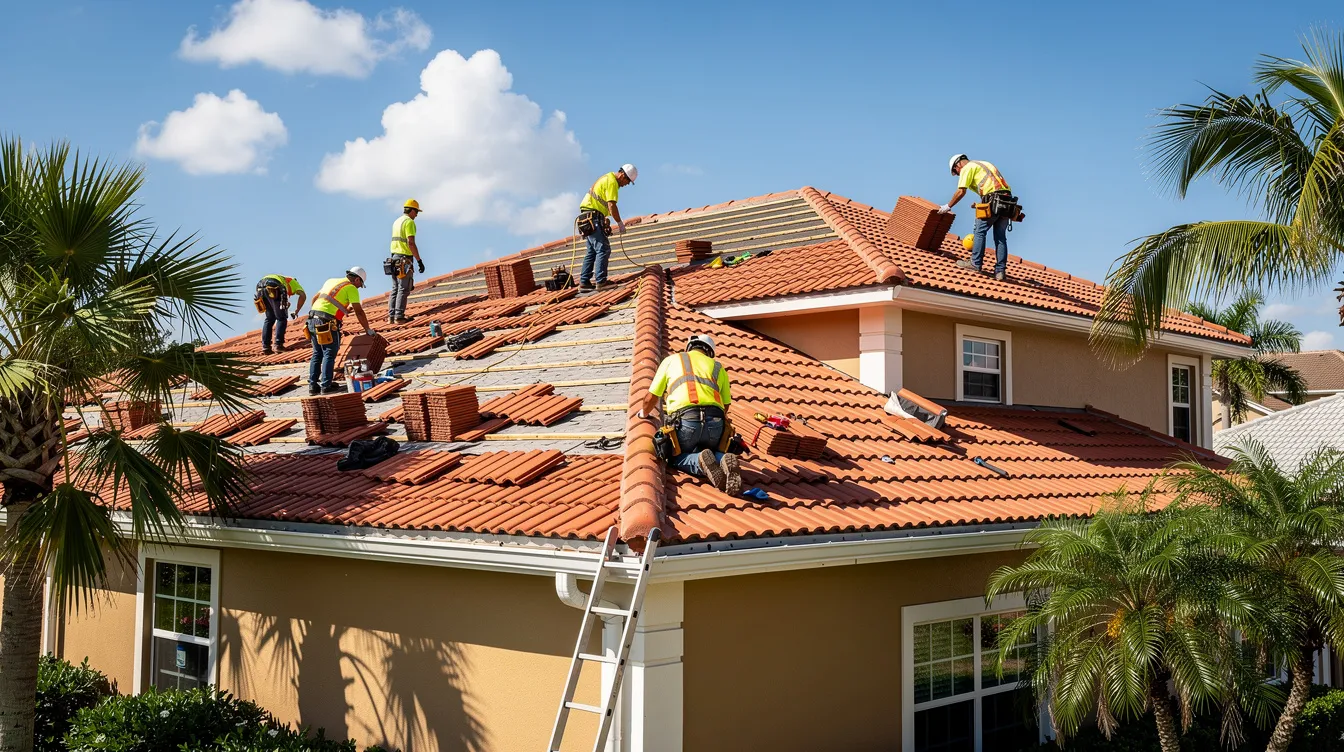
A small residential roof replacement in Lake Worth Beach may be covered only by the license bond and insurance, whereas a large civic building project in West Palm Beach may require separate project bonds with a guaranteed maximum price structure.
The County’s $2,000 bond does not replace any contract-specific surety requirements set by cities, school boards, or private owners. Contractor Licensing Inc. can help you evaluate whether you need only the license bond or a broader bonding program for growth in Palm Beach County and South Florida.
Budgeting for Bond and Licensing Costs in Palm Beach County
Contractors should budget annually for the $2,000 bond premium alongside other licensing and compliance costs. Here is a rough breakdown:
Cost Item | Estimated Amount |
|---|---|
$2,000 bond premium | $100–$200/year |
County license application fee (contractor) | $450 |
County license application fee (journeyman) | $100 |
Roof replacement permit costs | $200–$500 per project |
General liability insurance | Varies (minimum $100,000/$300,000 BI) |
Workers’ compensation or exemption | Varies |
Continuing education | Varies by trade |
Local business tax receipt | Varies by municipality |
License fees, bond premiums, and insurance costs are predictable expenses that belong in your annual overhead. Lapses happen most often when contractors simply overlook or under-budget for renewals-not because the costs are unaffordable.
Build the expected bond premium into your overhead rates and project pricing, particularly if you are a small firm working primarily in Palm Beach County. For contractors planning expansion or adding additional qualifiers, bonding and licensing costs will scale and should be projected ahead of time.
Contractor Licensing Inc. can help create a simple annual compliance budget for Palm Beach County contractors, covering bond, license fees, entity maintenance, and financial management of your licensing obligations.
Contractor Licensing Inc.: How We Help Palm Beach County Contractors
Contractor Licensing Inc. is a licensing and compliance services firm that helps contractors navigate Palm Beach County and Florida licensing, bond, and insurance requirements. Our services include:
New local license applications: From the initial trade exam through bond placement and County filing
Status changes: Transferring licenses between entities, adding qualifiers, or updating business structures
Qualifying additional businesses: Helping a single qualifier serve as the general contractor license holder for multiple entities
FEIN and entity setup: Forming LLCs, corporations, foreign entity registrations, and registered agent services
Bond placement: Working directly with surety partners to secure competitive rates and accurate bond forms for Palm Beach County’s specific requirements
Credit reporting: Personal and business credit reports for licensing applications
Marketing support: Digital marketing, direct mail, and targeted outreach for contractors building their brand in South Florida
We work directly with surety partners to match the exact bond language, obligee wording, and filing format the Palm Beach County CILB requires. No guesswork, no rejections.
Contact Contractor Licensing Inc. early in the planning stage to avoid delays in starting work, especially before busy seasons or major replacement project cycles.
Special Considerations for West Palm Beach and Other Local Jurisdictions
West Palm Beach, Boca Raton, Jupiter, and other municipalities within Palm Beach County may require their own contractor registrations, but they typically rely on the County license and bond as the core credential.
Contractors must register with the City of West Palm Beach for licensing-this is a separate step from holding the County license but usually requires showing proof of an active Palm Beach County license and $2,000 bond before the city issues local business tax receipts or allows permit pulling.
Some cities may have additional insurance, occupational license, or zoning requirements. Older coastal areas, historic districts, and communities near the beach improvement fund areas may impose extra review layers. For example, a contractor doing roof replacement and installing architectural shingles or clay tile roofs in West Palm Beach must ensure County bonding is current and also comply with city-level permit processes.
Palm Beach State College offers trade-related coursework and exam prep for contractors looking to qualify locally-another resource for those pursuing a County Certificate of Competency.
Contractor Licensing Inc. can map out city-by-city registration steps within Palm Beach County for a single, coordinated expansion plan, whether you are working in Royal Palm Beach, Lake Worth Beach, or any other municipality in the County.
How Contractor Bonds Support Economic Development in Palm Beach County
Consistent licensing and bonding requirements create a stable environment for homeowners, businesses, and public agencies to invest in construction projects. The $2,000 contractor bond helps the County screen out bad actors and gives consumers a measure of financial recourse, which builds trust in the local construction market.
The bond framework connects to Palm Beach County’s broader economic development efforts. Infrastructure work at Palm Beach International Airport, including total FAA funding allocation projects, depends on a reliable pool of bonded and licensed contractors. The consent agenda approval process for County commissioners regularly includes construction services contracts, facilities development initiatives, budget amendment items, and funding allocations for capital improvements division projects-all of which assume a competent, compliant contractor workforce.
The community services department, the home investment partnership program, the community land trust, financially assisted agencies, the community action program, and human services programs all interact with construction in some way. Whether it is a development fund project, financial assistance for housing rehabilitation, or environmental protection work tied to land management, the County needs contractors who are properly bonded, licensed, and insured.
Revenue bonds, loan agreement structures, and cooperative agreement frameworks for public construction all rely on the assumption that participating contractors hold valid credentials. A negotiated settlement offer or settlement discussions began by the county attorney or county administrator in a construction dispute will reference the contractor’s licensing and bond status. Budget transfer approvals, board appointments to construction-related committees, and even the criminal justice commission’s facility needs all touch the contractor licensing ecosystem.
The small business enterprise program and targeted outreach initiatives encourage local match participation by bonded contractors, particularly for replacement project work and property located in underserved communities. Reliable, bonded contractors are essential for long-term capital projects, housing initiatives, and hurricane recovery efforts across Palm Beach County and greater South Florida.
Positioning yourself as a compliant, bonded contractor is not just about avoiding penalties-it is a competitive advantage when pursuing higher-value work in the County.
Frequently Asked Questions: Palm Beach County Contractor License Bond
Is the $2,000 Palm Beach County contractor license bond the same as my insurance policy?
No. The bond is not insurance for the contractor. It is a guarantee to Palm Beach County and the public that you will follow laws and codes. If a claim is paid, you must reimburse the surety. Contractors still need separate general liability insurance, workers’ compensation, and possibly commercial auto coverage to protect their own business. Many licensing packages in Palm Beach County include both the $2,000 bond and required insurance, which Contractor Licensing Inc. can help coordinate.
Do I need a Palm Beach County contractor bond if I already have a Florida certified license?
Holding a Florida certified license through business and professional regulation (DBPR) does not automatically satisfy local Palm Beach County bond requirements. If you hold or are applying for a local Palm Beach County license-whether as a newly registered contractor or enrolling your state license locally-you must still meet the County’s $2,000 bond requirement. Verify your exact status (certified vs. registered vs. local only) and have Contractor Licensing Inc. review whether you need the local bond for your business plan.
How fast can I get a $2,000 contractor license bond for Palm Beach County?
Many straightforward applications can be quoted and approved the same day, with bond documents issued within 24 hours once the premium is paid. More complex cases involving credit issues, unusual ownership structures, or a need for additional legal documents may take longer while underwriters review extra documentation. Contractors on tight permit deadlines in West Palm Beach or other beach county cities should start the bond process as soon as they begin their Palm Beach County license application.
What happens to my bond if I change my company name or form an LLC?
Any legal name change or entity conversion generally requires updating or reissuing the bond to match the new business name and structure. A mismatch between the name on your bond and the name on your Palm Beach County license can lead to administrative issues or temporary non-compliance. The same applies if you change your initiating department or registered agent information. Contractor Licensing Inc. can assist with both entity changes (forming an LLC or corporation) and coordinating the necessary bond endorsements or replacements, including any updates to your license agreement or property owned records with the County.
Can I use the same bond for other Florida counties or for project performance bonds?
No. The $2,000 Palm Beach County contractor license bond is written specifically for Palm Beach County as obligee. It usually cannot be “reused” to satisfy another county’s or city’s bond requirement, such as those managed by the water utilities department or other local agencies. Performance and payment bonds for specific projects are separate instruments with different amounts and underwriting, even if they are also issued by a surety. Contractor Licensing Inc. can help contractors build a multi-county or statewide bonding strategy if they plan to work beyond Palm Beach County, including separate license and project bonds where needed. Contractors in Florida must obtain a $5,000 to $20,000 surety bond depending on the jurisdiction and license type, so costs and requirements will differ as you expand. A building permit in one jurisdiction does not guarantee acceptance in another without the proper local bond.
Getting bonded in Palm Beach County does not have to be complicated. Plan ahead, keep your records current, match your bond to your license exactly, and work with a team that knows the local system inside and out. Whether you need the $2,000 license bond, help with the County application, insurance coordination, or a complete compliance package, Contractor Licensing Inc. is here to get you permitted and working as quickly as possible.
Reach out to Contractor Licensing Inc. today to get your Palm Beach County contractor license bond and licensing handled from start to finish.
About the Author


